2026 Top Bottle Labeling Machine Types for Global Buyers
Bottle labeling is entering 2026 with more choices, tighter margins, and less room for equipment mistakes. A modern Bottle Labeling Machine must handle speed, accuracy, container variation, and changing sustainability targets. Global buyers may compare pressure-sensitive, wrap-around, roll-fed, shrink-sleeve, and print-and-apply systems. Each type solves a different production problem.
Industry data supports this growing attention. PMMI’s 2024 State of the Industry report valued U.S. packaging machinery shipments at approximately $10.2 billion in 2023. Its analysis also highlights automation, labor efficiency, and flexible packaging formats as important investment drivers. Smithers’ report, The Future of Labels and Labeling to 2028, identifies premium finishes, digital printing, variable information, and sustainability as continuing influences on label selection. These findings matter on the factory floor. A beverage line may run thousands of wet bottles per hour, while a cosmetics line may require precise placement on small, curved containers.
No single format wins everywhere. A pressure-sensitive machine may offer flexible artwork changes. A roll-fed system can support high-speed beverage production. A sleeve applicator may create strong shelf impact, but it can require more heat and process control. Buyers should examine container shape, label material, output targets, adhesive performance, changeover time, and local technical support. Forecasts are not purchase orders. A polished return-on-investment spreadsheet can still overlook dust, condensation, operator training, or spare-part delays. This guide compares the leading 2026 Bottle Labeling Machine types through practical performance, application fit, maintenance needs, and total ownership considerations.
Bottle Labeling Machines: Definition, Functions, and Main Components
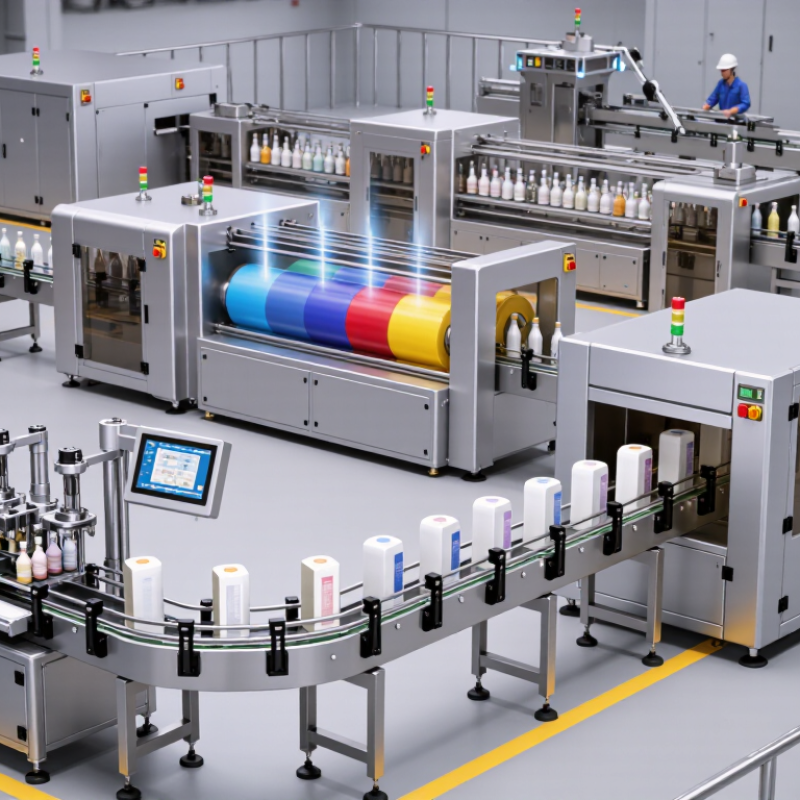
A bottle labeling machine applies and secures labels on containers with controlled speed and placement. It may handle pressure-sensitive, wrap-around, front-and-back, or sleeve labels. The machine also aligns artwork, checks label presence, and rejects poorly labeled bottles. The function sounds simple. In production, it depends on bottle shape, surface moisture, label material, and line speed. Smithers estimated the global label market at approximately US$48 billion in 2023, showing why consistent application matters to many packaging operations.
Its main components include a conveyor, bottle separator, label roll holder, dispensing plate, drive roller, sensor, and control panel. Some systems add a vision camera, date coder, or automatic rejection unit. The sensor detects each bottle. The control system then releases the label at a precise interval. A servo motor manages web tension and positioning. A weak sensor setting can create gaps or crooked labels, even when the machine seems mechanically sound.
PMMI industry reports identify automation, labor efficiency, and faster changeovers as continuing packaging priorities. These priorities influence labeling machine selection. Rotary machines suit high-volume lines, while inline machines offer easier access and flexible changeovers. Semi-automatic units can support smaller batches, but operator consistency becomes a variable. In my experience, specifications often look better than factory reality. Dust, condensation, and uneven bottles still cause trouble. Testing with real containers remains essential.
Key Machine Types Classified by Labeling Method and Bottle Shape
2026 Top Bottle Labeling Machine Types for Global Buyers
Bottle labeling machines are best classified by labeling method and bottle shape, not by speed alone. Pressure-sensitive systems apply pre-cut or roll-fed labels with adhesive. They suit glass jars, PET bottles, and many cosmetic containers. According to MarketsandMarkets, the global labeler market is projected to grow from about USD 3.2 billion in 2023 to USD 4.4 billion by 2028. This growth reflects demand for flexible packaging formats and shorter production runs.
Shrink-sleeve machines use heat to form a label around the container. They handle curved, tapered, and irregular bottles more effectively than many pressure-sensitive systems. Roll-fed systems can support high-volume cylindrical bottles, especially where a continuous film appearance matters. For square or oval bottles, front-and-back labeling machines often provide better control. They may require more precise bottle spacing. Small details matter.
Bottle shape changes the engineering decision. Cylindrical bottles generally work well with wrap-around labeling. Flat-sided bottles need controlled orientation before application. Tapered bottles may need customized rollers, vacuum plates, or sleeve tunnels. PMMI’s 2024 State of the Industry report recorded U.S. packaging machinery shipments at approximately USD 10.2 billion in 2023, showing the scale of ongoing automation investment. However, higher automation is not always better. A buyer should test label adhesion, speed changes, bottle tolerance, and cleaning access using real production samples. That judgment can be uncomfortable. The cheapest machine may become the slowest one.
How to Match Machine Types with Materials, Speeds, and Production Needs
2026 Top Bottle Labeling Machine Types for Global Buyers
How to Match Machine Types with Materials, Speeds, and Production Needs
Choosing a labeling machine starts with the bottle, not the advertised speed. Round PET bottles usually suit wraparound systems with adjustable rollers. Glass containers may need stronger gripping and gentler pressure. Flat bottles often require front-and-back labeling equipment with precise sensor control.
Material affects performance. Paper labels can absorb moisture near chilled products, while synthetic films resist condensation better. Clear labels demand accurate product detection and careful liner tension. For small batches, a semi-automatic machine can reduce changeover time and operator training. It may be slower, but it avoids unnecessary capital costs.
Speed calculations should include real production conditions. A machine rated for 120 bottles per minute may run closer to 85 after spacing, inspection, and label changes. Conveyor width, bottle stability, and adhesive behavior also influence output. Test samples using the exact bottle, label stock, and filling temperature. Test before scaling.
For mixed bottle sizes, prioritize tool-free adjustments and stored settings. For one stable format, a dedicated automatic system may deliver better consistency. I have seen buyers focus too heavily on maximum speed and overlook cleaning access. That decision often creates delays later. A practical evaluation should measure label placement, waste, changeover minutes, and operator effort across several shifts.
Global Buyer Checklist: Compliance, Maintenance, Cost, and Supplier Evaluation
For global buyers, a bottle labeling machine must satisfy the product, plant, and destination market. Check label placement accuracy, material compatibility, guarding, emergency stops, and electrical documentation. ISO 9001 certification supports process control, but it does not prove machine performance. Request test records using your bottles, labels, adhesive, and production speed. A small neck-ring variation can cause visible wrinkles.
Maintenance deserves a practical review. Ask for cleaning access, sensor locations, changeover time, and spare-part availability in your region. PMMI reported that U.S. packaging machinery shipments reached about 10.2 billion dollars in 2023, showing strong investment in automation. Yet higher automation can increase troubleshooting skill requirements. Keep critical sensors, belts, and applicator parts identified by service intervals. Some suppliers promise easy maintenance. Test it with gloves on.
Cost comparisons should include installation, training, software updates, energy use, rejects, and three-year downtime risk. Grand View Research projects the global labeling machine market to grow at roughly 5% annually through 2030. That growth may encourage aggressive sales claims. Ask for verified output data, acceptance criteria, warranty exclusions, and references from similar bottle formats. A low purchase price can become expensive after repeated changeovers. I would also score supplier response time, documentation quality, and remote-support limits. No evaluation is perfect; production trials often reveal assumptions that spreadsheets miss.