Why Are Lifting Slings Essential for Safe Lifting?

Safe lifting rarely begins with the crane. It begins with choosing the right lifting slings.

A sling may look simple: webbing, wire rope, or chain connecting a load to lifting equipment. Yet every detail matters. The sling’s material, length, angle, hitch, and working load limit affect the lift. A sharp steel edge can cut webbing. An extreme sling angle can multiply tension. A damaged tag can hide a serious uncertainty.

Mike Parnell, a respected crane and rigging educator, has said, “A sling is only as safe as its selection, inspection, and use.” That principle deserves attention before every lift, not only after an incident.

In real workplaces, conditions change quickly. A wet yard may reduce grip. Poor lighting may conceal broken fibers. A rushed operator may choose a sling by appearance rather than capacity. These small decisions can create large consequences.

Effective lifting plans combine training, equipment knowledge, and careful communication. Workers should inspect lifting slings before use and remove questionable equipment from service. They should also confirm the load weight, center of gravity, connection points, and lifting path.

No system is perfect.

Even experienced teams can overlook fatigue or an incorrect angle. That is why safe lifting requires more than confidence. It requires disciplined checks, accurate records, and the willingness to stop when something feels wrong.

This article explores why lifting slings are essential for safe lifting and how practical selection and inspection reduce avoidable risks.

Why Are Lifting Slings Essential for Safe Lifting?

Lifting Sling Types and Their Roles in Load Handling

Why Are Lifting Slings Essential for Safe Lifting?

Lifting Sling Types and Their Roles in Load Handling

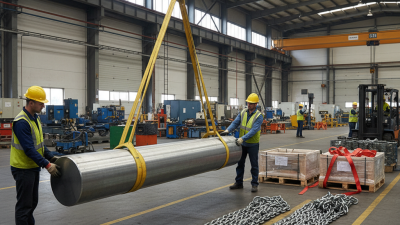
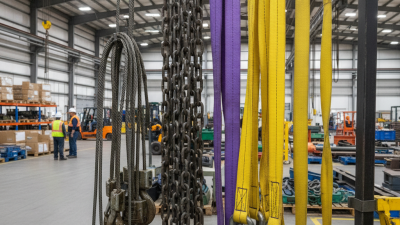
Lifting slings connect a load to a crane, but their roles differ by material and working condition. Webbing slings are soft and flexible. They suit painted surfaces, boxed equipment, and loads with delicate finishes. However, sharp edges can cut them quickly without suitable edge protection.

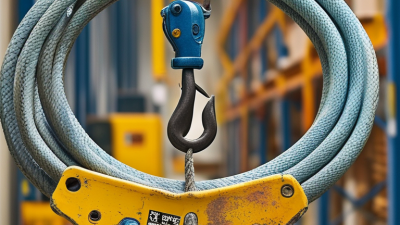
Wire rope slings resist abrasion and tolerate demanding outdoor work. They often handle steel components, machinery, and loads exposed to heat or rough contact. Chain slings provide strong, adjustable connections. They are useful for hot, heavy, or irregular loads. Round slings offer flexibility and spread contact around smooth loads, reducing surface damage.

The correct sling depends on weight, shape, balance, temperature, and lifting angle. A narrow angle increases tension in each sling leg. That detail is easy to miss. Inspect the sling before every lift for cuts, broken wires, stretched links, chemical damage, or unreadable identification tags. Remove damaged equipment from service immediately.

In practical lifting work, rushed preparation causes many avoidable mistakes. I have seen teams choose a sling by appearance instead of checking its rated capacity. That habit needs correction. Fit matters. The load should remain stable, protected, and clear of people throughout the lift. Never rely on a sling alone to fix poor load balance. Experienced crews check the connection, communication signals, and landing area before the crane moves.
Rated Capacity, Load Weight, and the 5:1 Design Factor

A lifting sling is only as safe as its rated capacity. The rating shows the maximum working load under specific conditions. It is not an approximate number. Before lifting, identify the load’s actual weight, center of gravity, and attachment points. Guessing can make a controlled lift dangerous.

Sling angles also change the working load. As the angle becomes more horizontal, tension in each leg increases sharply. A sling rated for a vertical lift may have a lower capacity in a basket or choker configuration. Check the capacity tag and follow the manufacturer’s instructions. Inspect for cuts, heat damage, broken stitching, stretched fittings, or missing labels. Small defects matter.

The 5:1 design factor means the sling’s minimum breaking strength is five times its rated working load. This factor provides a safety margin for normal wear, manufacturing variation, and lifting forces. It does not allow a sling to carry five times its rating. Never treat that ratio as spare capacity. A competent person should review unusual loads, sharp edges, sudden movement, and uneven loading. In practice, workers may focus on the sling tag and overlook the load’s shifting center. I have seen how that assumption creates risk. The lift may look stable, yet one corner can rise first. Stop and reassess when the setup feels uncertain. Five extra minutes can expose a problem.

Why Are Lifting Slings Essential for Safe Lifting? - Rated Capacity, Load Weight, and the 5:1 Design Factor
Safety Dimension Verified Value or Rule Example Data Why It Matters
Rated Capacity / Working Load Limit (WLL) The WLL is the maximum load a sling is permitted to lift under specified conditions, including sling type, hitch, angle, and connection method. A vertical-lift sling marked with a WLL of 2,000 kg must not be treated as having the same capacity in a choker or angled configuration. Capacity markings must be checked before every lift. The lowest-rated component in the complete lifting system controls the allowable load.
5:1 Design Factor For many synthetic web slings, the minimum design factor is commonly specified as 5:1. This means the minimum breaking strength is at least five times the rated capacity, subject to applicable regulations and standards. Minimum breaking strength = WLL × 5
For a 2,000 kg WLL sling: 2,000 × 5 = 10,000 kg minimum breaking strength.
The design factor is not extra lifting capacity. It provides a margin between the rated working load and the minimum breaking strength under defined test conditions.
Wire Rope Sling Design Factor A commonly applied minimum design factor for wire rope slings is 5:1, although the required value depends on the governing regulation, construction, and application. For a wire rope sling rated at 1,500 kg, the corresponding minimum breaking-strength basis would be 7,500 kg when a 5:1 factor applies. Do not substitute the design factor for the manufacturer’s rated capacity chart or inspection requirements.
Other Sling Design Factors Common regulatory minimums differ by sling type: alloy steel chain slings and metal mesh slings are often specified at 4:1, while natural or synthetic fiber rope slings are often specified at 3:1. These values are not interchangeable with the 5:1 factor for synthetic web slings. The applicable regulation and sling standard must be confirmed for each product. Using the wrong design factor can lead to incorrect capacity assumptions and unsafe lift planning.
Total Load Weight The lifted weight includes the load, pallets, lifting beams, shackles, hooks, spreader bars, and any other attached equipment. Load: 1,700 kg
Rigging hardware: 100 kg
Total lifted weight: 1,800 kg
Comparing sling capacity with the product weight alone can underestimate the actual force applied to the lifting system.
Single-Leg Vertical Lift For a straight vertical lift, the sling WLL must be equal to or greater than the total lifted weight. Total load: 1,800 kg
Required sling WLL: at least 1,800 kg
The sling must be aligned with the load and connected correctly. Side loading, bending over sharp edges, or shock loading can reduce safe capacity.
Two-Leg Sling at 60° from Horizontal For a symmetric two-leg sling, the approximate assembly capacity is calculated as:
2 × WLL per leg × sin(angle)
Two legs rated at 1,500 kg each:
2 × 1,500 × sin(60°) ≈ 2,598 kg theoretical assembly capacity.
The angle must be measured from the horizontal. Each leg carries more tension as the sling becomes flatter.
Two-Leg Sling at 45° from Horizontal The angle factor is approximately 0.707 for each leg when the sling angle is 45° from horizontal. Two legs rated at 1,500 kg each:
2 × 1,500 × 0.707 ≈ 2,121 kg theoretical assembly capacity.
A lower sling angle creates higher leg tension. The lifting plan should use the applicable rated-capacity chart rather than relying only on a simple calculation.
Two-Leg Sling at 30° from Horizontal The angle factor is 0.5 for each leg at 30° from horizontal. Two legs rated at 1,500 kg each:
2 × 1,500 × 0.5 = 1,500 kg theoretical assembly capacity.
Angles below 30° are generally discouraged unless specifically engineered and approved because sling tension rises sharply.
Choker Hitch A choker hitch normally has a lower rated capacity than a vertical hitch. The exact reduction depends on the sling material, choke angle, diameter, and manufacturer’s chart. A sling with a 2,000 kg vertical WLL may have a choker WLL below 2,000 kg. The actual value must come from the sling identification tag or capacity chart. Never estimate a choker capacity by applying a universal percentage to every sling type.
Load Balance and Center of Gravity The center of gravity must remain inside the support polygon formed by the sling legs or lifting points. If the center of gravity is offset, one leg may carry significantly more than its proportional share of the load. An unevenly loaded sling assembly can overload one leg even when the total load appears to be within the combined WLL.
Edge Protection Synthetic slings must be protected from sharp edges, corners, abrasion, heat, chemicals, and cutting hazards. Use suitable corner protectors or padding where a sling contacts a sharp or narrow edge. Visible or internal damage can reduce sling strength without changing the load weight.
Inspection Before Use Inspect the sling, fittings, stitching, identification tag, and contact surfaces before each use. Remove a synthetic sling from service if it has cuts, burns, chemical damage, melted fibers, excessive abrasion, damaged stitching, or an unreadable tag. A sling without a legible rated-capacity tag should not be used until its identity and capacity are verified.
Shock Loading Sudden starts, stops, snags, and dropped loads can create forces substantially greater than the static load weight. A 1,800 kg load can impose much higher dynamic forces if it is jerked or caught after a fall. Lift smoothly, keep the load under control, and prevent snagging or impact loading.
Safe Selection Rule Choose a sling whose rated capacity, in the actual hitch and angle used, is at least equal to the total lifted weight. Actual WLL ≥ total load weight
For a 1,800 kg total load, the selected configuration must be rated for at least 1,800 kg.
The 5:1 design factor does not permit the sling to lift five times its WLL. WLL remains the maximum permitted working load.
Important: Capacity examples are engineering calculations for illustration. Always follow the sling identification tag, applicable lifting regulations, the current rated-capacity chart, and the requirements of a competent person. The lowest-rated component and the most severe loading condition determine the safe working limit.

Sling Angle Effects on Tension and Working Load Limits

Why Are Lifting Slings Essential for Safe Lifting?

Sling Angle Effects on Tension and Working Load Limits

Lifting slings help distribute weight, but their safety depends on more than rated capacity. The sling angle can sharply increase tension in each leg. This detail is often underestimated.

For a two-leg sling, tension rises as the angle becomes flatter. At a 60-degree angle from horizontal, each leg carries about 58% of the load. At 30 degrees, each leg carries the full load. A 1,000-kilogram lift may place roughly 1,000 kilograms on each leg at 30 degrees. At 20 degrees, the tension becomes much higher. Avoid shallow angles whenever possible. Never treat the angle as a minor adjustment.

Working load limits must match the sling type, hitch, angle, connection hardware, and load condition. The lowest-rated component controls the lift. Check the manufacturer’s capacity chart before positioning the load. Inspect for cuts, abrasion, heat damage, distorted fittings, and unreadable identification tags. Also confirm that the load’s center of gravity will not shift during lifting.

A practical mistake is trusting a setup because it looks balanced. It may not be. Uneven loading can overload one sling leg, especially when the load has sharp edges or flexible packaging. Use edge protection where needed, keep personnel clear, and raise the load only a few centimeters for a controlled test. Stop if the sling twists, the load tilts, or the hardware seats poorly. A careful plan can still need revision on site.

Inspection Rules Under OSHA 1910.184 and ASME B30.9

Lifting slings are essential because they distribute load forces around cargo and reduce uncontrolled movement. A damaged sling can fail without much warning. OSHA 1910.184 requires employers to inspect slings each day before use. Workers must remove defective slings from service immediately. Look for broken wires, severe abrasion, cuts, kinks, crushed sections, heat damage, and distorted fittings. Wire-rope slings also require removal after specific broken-wire limits are reached. For example, OSHA identifies ten randomly distributed broken wires in one rope lay as a rejection condition. That detail matters.

ASME B30.9 adds a practical inspection structure: initial, frequent, and periodic inspections. Inspection frequency should reflect use, load conditions, and environmental exposure. A sling used daily near sharp edges deserves more attention than one stored indoors. Check identification tags, rated capacity, stitching, hooks, and contact points. Keep hands away from pinch zones. BLS reported 5,283 fatal occupational injuries in 2023, while falls, slips, and trips caused 885 deaths (BLS, Census of Fatal Occupational Injuries, 2023). These figures do not measure sling failures directly, but they show why lifting controls deserve discipline. A clean sling can still be the wrong sling. A checklist is not proof of safety. Supervisors should record findings, explain rejection decisions, and review recurring damage. In practice, inspection quality sometimes depends too heavily on rushed judgment. That weakness needs correction.

Correct Rigging Practices for Balance, Protection, and Control

Why Are Lifting Slings Essential for Safe Lifting?

Correct Rigging Practices for Balance, Protection, and Control

Lifting slings help crews move heavy loads with measured control. Their value depends on correct rigging, not appearance alone. Before lifting, inspect the sling for cuts, burns, broken stitching, chemical damage, and stretched fibers. Check its identification tag and rated capacity. Never guess the working load limit. I have seen rushed teams overlook small edge damage that later became serious.

Balance begins with locating the load’s center of gravity. Attach the sling above that point whenever possible. Unequal sling lengths can tilt a load without warning. Use suitable hitch types, and confirm the sling angle does not create excessive tension. Shallow angles increase forces. Keep hands away from pinch points.

Protection matters as much as capacity. Sharp corners can cut synthetic fibers, even during a slow lift. Place proper corner protectors between the sling and the load. Make sure the sling sits flat and does not twist. A test lift of only a few inches can reveal sliding, tilting, or poor balance. Stop if anything shifts unexpectedly. Clear communication between the operator and signal person maintains control. I still recheck familiar lifts, because routine can create careless assumptions. Experienced workers can miss details too.