
Choosing a Medical Syringe Pump is a clinical decision, not merely a purchasing exercise. The device controls small volumes, often at critical moments, where a slight flow error can matter. A neonatal ward, oncology unit, and ambulance may need very different performance characteristics.
The U.S. Food and Drug Administration has repeatedly highlighted infusion pump risks, including programming errors, alarm failures, software problems, and inadequate maintenance. Its infusion pump safety communications also document tens of thousands of adverse-event reports linked to infusion pumps in earlier reporting periods. The World Health Organization’s Medication Without Harm initiative further emphasizes safer medication systems, accurate administration, and staff competence. These findings support a careful assessment of flow accuracy, occlusion detection, alarm clarity, battery endurance, drug-library options, and cleaning requirements.
Real use exposes the weaknesses.
A pump may look impressive on a showroom table but behave differently with thick medicines, long tubing, low flow rates, or interrupted power. ECRI’s patient-safety research consistently encourages healthcare organizations to examine usability, alarm management, cybersecurity, and staff training before adoption. However, reports cannot replace bedside testing. That is an easy point to overlook.
This guide presents seven practical tips for choosing a Medical Syringe Pump. It considers clinical workload, patient risk, maintenance access, regulatory documentation, and total ownership cost. Some recommendations may need adjustment for local protocols and patient populations. That uncertainty is acceptable. A reliable decision should acknowledge it, document it, and test the pump under realistic conditions before widespread deployment.
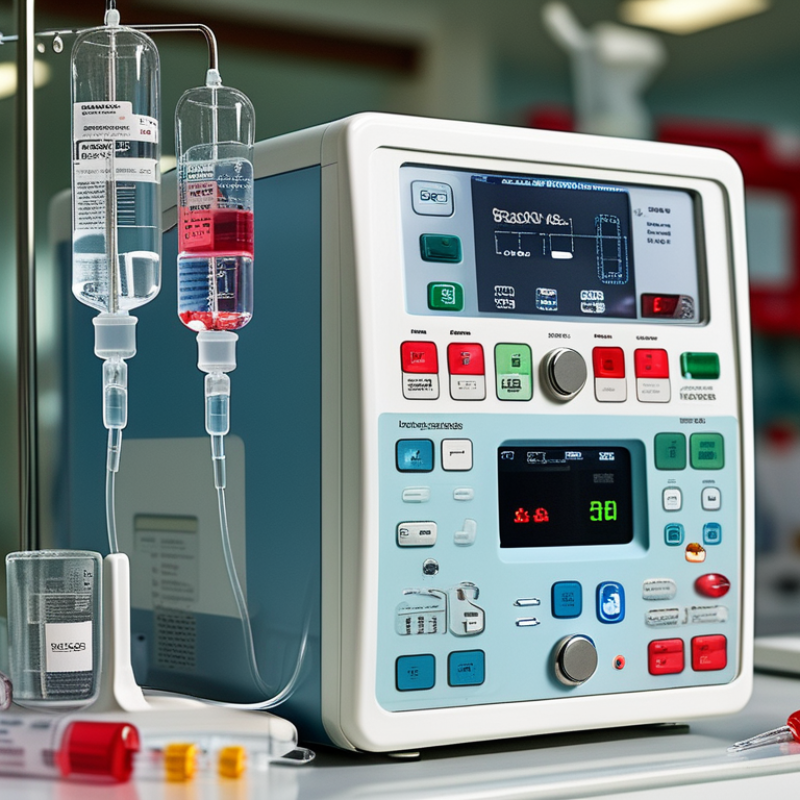
Choosing a medical syringe pump should begin with the clinical requirement, not the device’s appearance. A neonatal unit may need extremely low flow rates and precise occlusion detection. An emergency department may prioritize rapid setup, clear alarms, and battery endurance. Confirm the required drug concentration, syringe volume, delivery rate, and pressure limits before comparing models. Small details matter, especially when a patient receives potent medication through a narrow line.
Accuracy should be checked across the intended flow range, not only at one advertised setting. Review test evidence against IEC 60601-2-24 and local clinical protocols. The U.S. FDA reported more than 56,000 infusion-pump adverse events and approximately 500 deaths between 2005 and 2009. That historical signal still deserves attention. Ask how the pump detects occlusion, prevents free flow, records events, and alerts staff during a near-empty syringe. Loud alarms are not automatically safer. Nurses must understand them quickly.
Workflow requirements also shape the choice. A pump should support straightforward cleaning, secure mounting, intuitive programming, and reliable battery operation during transfers. The World Health Organization estimated that medication errors cost about 42 billion US dollars globally each year. Syringe pumps cannot solve every medication error. They can, however, reduce avoidable risks when paired with double-check procedures and staff training. Test the pump with real syringes, extension sets, and typical medicines. Laboratory performance may not match a crowded bedside. That assumption needs challenging.
Flow rate accuracy should guide every syringe pump decision. A tiny error can matter during prolonged infusions. Check the stated accuracy range at low, medium, and high rates. Ask whether testing included different syringe sizes. Performance may change noticeably.
Confirm compatibility with the syringe types used in your facility. The pump should recognize the correct barrel diameter, plunger shape, and connector design. Check the supported volume range, including smaller syringes for precise dosing. A secure fit reduces slipping and delivery interruptions. Also examine dead space, because retained fluid can affect very small-volume infusions. Less is not always better, though. Some designs may trade capacity for stability.
Review occlusion detection, alarm timing, battery duration, and calibration procedures. These features support safer operation, but they do not replace trained observation. In my experience, staff often focus on the display and overlook setup technique. That is a mistake worth correcting.
Test the pump with the actual syringe and tubing combination before clinical use. Record the flow rate, alarm response, and start-up delay.
Temperature, viscosity, and back pressure can also influence delivery. I would not rely on one laboratory result. Repeated checks reveal weaknesses more honestly. Clear instructions, service records, and accessible technical support strengthen confidence in long-term performance.
Safety features deserve closer attention than a long product specification. Check whether the pump includes anti-bolus protection, secure syringe fixation, battery alerts, and a clear start-up self-test. The syringe should remain stable when the device is moved. Buttons should resist accidental activation, especially during transport. A useful alarm must be loud enough for the care setting, yet not confusing. Test low battery, near-end, empty syringe, and door-open alerts before clinical use. Short alarms are easier to notice.
Occlusion detection is equally important. Ask how quickly the pump detects rising pressure and whether it limits the delivered bolus after blockage release. Review adjustable pressure thresholds, because one setting may not suit every patient or medication. Inspect the tubing route, connectors, and clamp position during testing. Small bends can trigger false alarms. No detection system is perfect. That matters. Staff should know how to respond, not simply silence the alarm. Read the instructions, record routine checks, and confirm calibration according to the facility’s procedures. A pump that performs well in a quiet room may behave differently beside monitors, beds, and moving equipment. Reassess it in the real care environment.
Usability should match the real clinical setting, not just the product brochure. The World Health Organization estimates that medication errors cost about US$42 billion worldwide each year. A syringe pump should therefore offer clear controls, readable numbers, and alarms that staff can recognize quickly. Test loading, rate changes, and occlusion responses with gloved hands. Small symbols can become confusing under pressure. A short training session may reveal more than a long specification sheet.
Portability matters during transfers, bedside care, and emergency procedures. Check the pump’s weight, carrying handle, pole clamp, and battery balance. It should remain stable when attached to a moving stand. Review battery runtime under actual flow conditions, not only laboratory claims. The U.S. Food and Drug Administration has repeatedly highlighted programming and alarm-related risks in infusion pump safety communications. That makes simple workflows valuable. Still, “easy to use” is subjective. Ask nurses to complete common tasks without coaching, then record mistakes and hesitation.
Power options deserve equal attention. Choose a model supporting dependable mains power, rechargeable battery use, and visible low-battery warnings. Confirm charging time, battery replacement procedures, and performance during brief power interruptions. ECRI’s annual health technology hazard reports continue to identify infusion-device errors as a patient-safety concern. A backup plan is essential. It may be imperfect, but ignoring transport delays is worse. Review maintenance records, alarm logs, and training requirements before purchase. Reliability is demonstrated over time.
Choosing a medical syringe pump requires more than comparing flow-rate ranges. Maintenance, certifications, and total cost often determine whether the device remains dependable after months of daily use.
Ask how often calibration is required, and who can perform it. Check whether the pump provides clear occlusion alerts, battery status, and event records. Cleaning should be practical, especially around the syringe holder and control panel. Confirm that replacement batteries, cables, and service parts are available locally. A short service delay can disrupt a busy ward.
Certification documents deserve careful review. Look for applicable medical-device, electrical-safety, and electromagnetic-compatibility approvals in your region. Request current certificates, not screenshots from an old product file. Verify the model number, testing scope, and certificate validity. Documentation should also explain software updates, alarm testing, and traceability. A certificate alone does not prove everyday performance.
Calculate the full ownership cost before purchase. Include syringes, calibration, preventive servicing, staff training, batteries, downtime, and disposal. A low purchase price may hide expensive consumables. I have seen teams overlook training time. That mistake mattered. Ask for a realistic maintenance schedule and a written service quotation. Compare warranty terms, response times, and loaner arrangements. Then test the interface with actual staff. If alarms are confusing during a night shift, the pump may be costly in ways a spreadsheet misses.
| Tip | Evaluation Dimension | Practical Data or Benchmark | What to Verify Before Purchase | Suggested Weight |
|---|---|---|---|---|
| 1 | Confirm the intended clinical use | Common syringe pump applications include controlled delivery of medications, analgesics, sedatives, hormones, and neonatal or pediatric fluids. | Check compatibility with the required care area, patient population, drug concentration, syringe sizes, and continuous or intermittent infusion mode. | 20% |
| 2 | Review flow-rate performance | Many clinical syringe pumps provide low, precisely controlled rates, commonly from approximately 0.1 mL/h to 1,000 mL/h, depending on the syringe size and device design. | Request accuracy specifications, start-up delay data, occlusion response, bolus volume, anti-free-flow protection, and performance at low flow rates. | 20% |
| 3 | Check syringe and accessory compatibility | A pump may support several syringe capacities, often including 5 mL, 10 mL, 20 mL, 30 mL, and 50/60 mL, but compatibility is model-specific. | Verify the approved syringe list, barrel and plunger dimensions, extension sets, clamps, pole mounts, battery packs, and whether custom syringe libraries can be updated. | 15% |
| 4 | Evaluate alarms and usability | Important alarms typically include occlusion, near-end, end-of-infusion, empty battery, syringe displacement, drive failure, and door or clamp errors. | Assess alarm priority, audible and visual indicators, screen readability, keypad protection, language options, event logs, dose-error reduction features, and staff training time. | 15% |
| 5 | Review maintenance requirements | Preventive maintenance commonly includes visual inspection, cleaning, battery assessment, alarm testing, occlusion testing, drive-mechanism inspection, and flow-rate verification. | Obtain the service interval, calibration procedure, recommended test equipment, spare-parts availability, battery replacement method, software support period, and repair turnaround target. | 10% |
| 6 | Verify certifications and regulatory documentation | Relevant documentation may include a medical-device regulatory authorization, ISO 13485 quality-management certification, IEC 60601-1 electrical safety compliance, and IEC 60601-1-2 electromagnetic compatibility testing. | Confirm that certificates apply to the exact model and intended market. Request the declaration of conformity, risk-management records, electrical-safety reports, EMC reports, labeling, and current instructions for use. | 10% |
| 7 | Calculate total cost of ownership | Total cost includes purchase price, accessories, training, preventive maintenance, calibration, batteries, repairs, software updates, downtime, and disposal or replacement costs. | Compare a 5-year ownership estimate and record warranty length, included accessories, annual service costs, consumable requirements, expected battery life, loaner availability, and repair charges. | 10% |
| Total Evaluation Weight | 100% | |||


