Top 10 Swivel Eye Bolt Suppliers for Global Buyers?
Choosing a reliable swivel eye bolt supplier can shape an entire lifting, rigging, or marine hardware project. Buyers need more than attractive product photos and competitive prices. They need verified materials, consistent machining, accurate threads, and dependable documentation.
This introduction reviews ten swivel eye bolt suppliers serving global buyers. The evaluation considers manufacturing experience, product range, load ratings, corrosion resistance, quality systems, and export capability. Supplier credibility also depends on traceability. Material certificates, inspection records, proof-load testing, and clear technical drawings can reveal how seriously a manufacturer manages risk.
Practical sourcing details matter. A strong supplier should explain working load limits, safety factors, surface treatments, packaging methods, and customization options. Lead times matter too. A delayed shipment can leave a construction site with idle workers and unused lifting equipment. Responsive communication is equally important, especially when dimensions or thread standards differ between markets.
Not every catalog tells the full story. Some suppliers show impressive specifications but provide limited test evidence. That deserves careful questioning. Product quality may also vary between standard and custom orders. This guide therefore looks beyond rankings and marketing language. It focuses on evidence that global buyers can check before placing an order.
The right swivel eye bolt supplier should combine engineering knowledge with consistent production control. Buyers should still confirm application requirements with qualified professionals. This list offers a practical starting point, not a substitute for technical verification. Suppliers change, and so do project conditions. Careful review remains essential.
What Is a Swivel Eye Bolt and Where Is It Used?
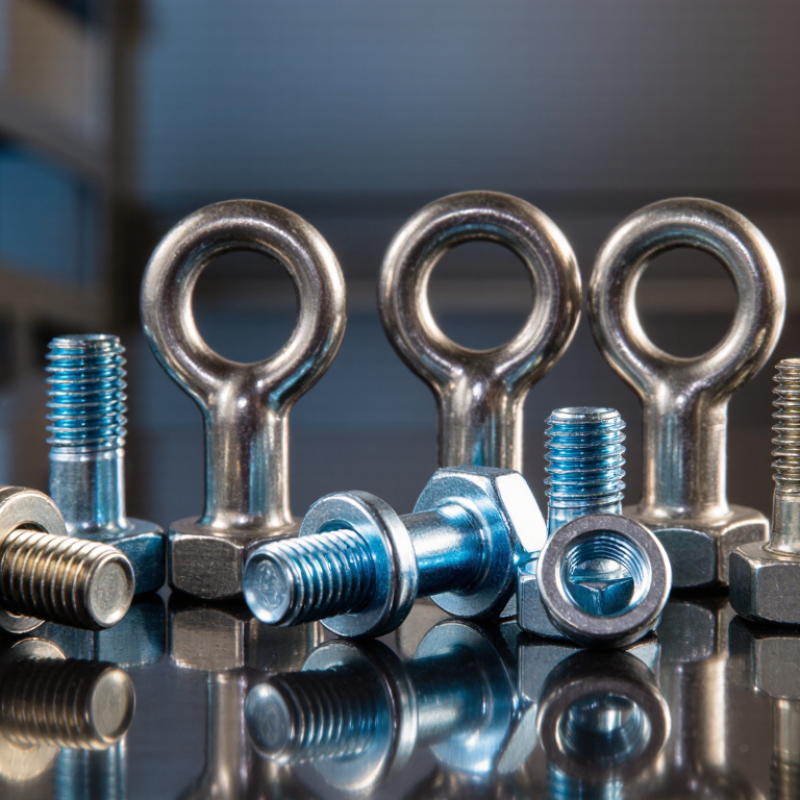
A swivel eye bolt is a fastening device with an eye that can pivot around its threaded base. Unlike a fixed eye bolt, it can adjust to changing pull directions. This movement helps reduce side loading, especially when a connected cable or strap shifts during use. However, not every swivel eye bolt is approved for lifting. The product rating must clearly state its permitted load, direction, and installation method.
These bolts are used in lifting fixtures, marine equipment, machinery guards, transport systems, and temporary anchoring points. On a workshop floor, an operator may connect a wire rope through the eye and notice the eye turning as the load moves. That small movement can protect the connection. It cannot correct poor installation.
Threads must match the receiving hole, contact surfaces should be clean, and the bolt must sit fully against the mounting face. Cross-threading remains a common and expensive mistake.
Global buyers should request material certificates, dimensional drawings, load-test records, and inspection procedures from suppliers. Check whether the stated capacity applies to vertical loading or angled loading. Saltwater environments may require corrosion-resistant steel, while dusty factories may need protected threads. Packaging also matters; damaged threads can make a compliant part unusable.
I have seen specifications look convincing but omit the working angle. That omission deserves a careful question before purchase. Availability is useful, but traceability matters more.
How to Define Requirements for Global Swivel Eye Bolt Sourcing
Before comparing the top 10 swivel eye bolt suppliers, global buyers should define the application precisely. State the working load limit, lifting direction, rotation range, and expected operating frequency. A swivel eye bolt used on a temporary rig differs from one exposed to daily outdoor service.
Specify material and finish in measurable terms. For example, request alloy grade, heat-treatment condition, corrosion protection, and acceptable surface defects. Provide thread diameter, pitch, eye dimensions, shank length, and installation clearance. A simple drawing with tolerances prevents costly interpretation gaps. It sounds basic, but many sourcing delays begin with missing dimensions.
Ask suppliers for test reports, inspection records, traceability details, and clear marking requirements. Confirm whether the quoted load applies during rotation or only in a fixed direction. Request proof-load values and testing methods, not just a general “high strength” claim. Packaging should protect threads from impact and moisture during long-distance transport. Also define order quantity, sample requirements, target delivery window, destination port, and preferred trade terms.
Do not over-specify every feature. Excessive requirements can raise costs without improving safety. Yet vague wording creates greater risk. A spreadsheet helps, but it can create false confidence if the assumptions are wrong. Recheck the load calculation with a qualified engineer, especially when shock loading, angled lifting, or repeated rotation is involved. Supplier responses should be compared against the same requirement sheet, not against attractive prices alone.
Which 10 Suppliers Serve International Swivel Eye Bolt Buyers?
International buyers seeking swivel eye bolts can consider ten supplier profiles: a forged-hardware manufacturer, a stainless-steel specialist, a lifting-equipment producer, a marine fastener supplier, and a custom-thread workshop. Other useful options include a bulk exporter, a small-batch engineering shop, a construction hardware supplier, a corrosion-resistant parts maker, and a certified rigging component distributor. These profiles cover different purchasing needs, from standard M10 bolts to customized imperial threads.
A dependable supplier should provide material certificates, dimensional drawings, working-load data, and batch traceability. Ask whether the eye rotates smoothly under load, not only by hand. Check thread accuracy with gauges. Request photographs of forging surfaces, washers, packaging, and protective caps. Export experience also matters. Strong cartons, moisture barriers, and clear labels can prevent damage during long sea transport.
My evaluation would compare lead time, minimum order quantity, inspection methods, and replacement policies. A low price can hide weak documentation or inconsistent heat treatment. That risk is easy to underestimate. No supplier is perfect, including experienced exporters. I would request independent testing for critical lifting applications and confirm that specifications match the destination market. Samples should be tested before a larger purchase, especially when bolts face saltwater, vibration, or repeated loading.
Top 10 Swivel Eye Bolt Suppliers for Global Buyers
ISO metric coarse-thread reference for international swivel eye bolt specifications
The chart shows nominal diameters and corresponding ISO metric coarse thread pitches commonly used when specifying industrial fasteners, including swivel eye bolt assemblies. These technical reference values support supplier comparisons without displaying company or brand performance data.
How to Compare Supplier Quality, Compliance, and Production Capacity
Top 10 Swivel Eye Bolt Suppliers for Global Buyers?
Comparing swivel eye bolt suppliers requires more than checking price lists. Review material certificates, heat-treatment records, thread gauges, and load-test results. ISO 898-1 helps verify mechanical properties for carbon and alloy steel fasteners. For lifting applications, request testing against the relevant regional safety standard, not a generic factory statement.
The International Labour Organization estimates 2.93 million work-related deaths annually, making traceability a practical purchasing issue.
Production capacity needs evidence. Ask for monthly output by model, current machine utilization, backup equipment, and average lead times. A supplier claiming 100,000 pieces monthly should show purchase orders, inspection capacity, and packaging space. The ISO Survey 2023 recorded more than 1.2 million ISO 9001 certificates worldwide, but certification alone does not prove consistent bolt quality. Audit recent batches and compare hardness readings across several production lots. One sample can look excellent. That is not enough.
Tips:
Build a scorecard covering quality, compliance, capacity, delivery, and corrective-action speed. Request three randomly selected inspection reports. Check whether serial numbers connect raw material to final packaging. For critical lifting hardware, use independent laboratory verification before approval. A polished certificate may hide weak process control. Buyers should also admit one uncomfortable point: the cheapest quote can become the most expensive choice after delays, recalls, or failed field inspections.
What Should Buyers Check Before Placing a Global Order?
When comparing swivel eye bolt suppliers for a global order, buyers should verify the working load limit, not only the breaking load. These values are different. Ask for material specifications, heat-treatment details, thread dimensions, and proof-test records. A clear drawing should show the eye diameter, shank length, thread type, and permitted loading direction. Small dimensional differences can create serious installation problems.
Request recent inspection reports and product traceability documents. Reliable suppliers should identify batches, production dates, and testing methods. Check whether the swivel eye bolt is designed for lifting, anchoring, or general fastening. Never assume one application covers all three. Ask how the joint performs under repeated movement, side loading, and outdoor exposure. Corrosion protection also matters, especially when containers may face salt air during ocean transport.
Samples deserve close attention. Measure the threads, inspect the rotating joint, and look for rough machining or uneven coatings. A polished certificate is not enough. Buyers should also confirm packaging strength, carton markings, minimum order quantities, production capacity, and replacement procedures. Shipping terms, export documents, and destination requirements must be agreed in writing. It is easy to choose the lowest quotation, but that habit can hide testing gaps or delayed delivery. I would leave room for doubt and ask one more technical question before payment.