China Top 10 Tirfor Winch Manufacturers for Global Buyers
Choosing a tirfor winch manufacturer is not just a price comparison. Global buyers need to examine rated capacity, rope compatibility, build quality, spare-parts access, and technical support. A compact unit may look ideal on a warehouse shelf, yet perform poorly when its rope length or working conditions do not match the job. Small details matter.
This guide compares ten manufacturers and suppliers for buyers evaluating options across different markets. It focuses on verifiable product information, service capabilities, and practical selection criteria, rather than treating any list as a universal ranking. The right choice depends on the load, pulling distance, duty cycle, and operator training. Capacity is not everything. Buyers should also check operating instructions, inspection guidance, and the availability of genuine replacement parts before making a purchase.
Safety expert James Reason wrote, “We cannot change the human condition, but we can change the conditions under which humans work.” His work concerns human factors and safety, not tirfor winch manufacturing; the principle is still useful when assessing equipment and support systems. A clear manual, accessible service, and well-designed controls can help reduce avoidable errors. They do not replace competent operation or site-specific risk assessment. Use this overview as a starting point, then confirm specifications directly with each manufacturer.
What Tirfor Winches Are and Where They Are Used
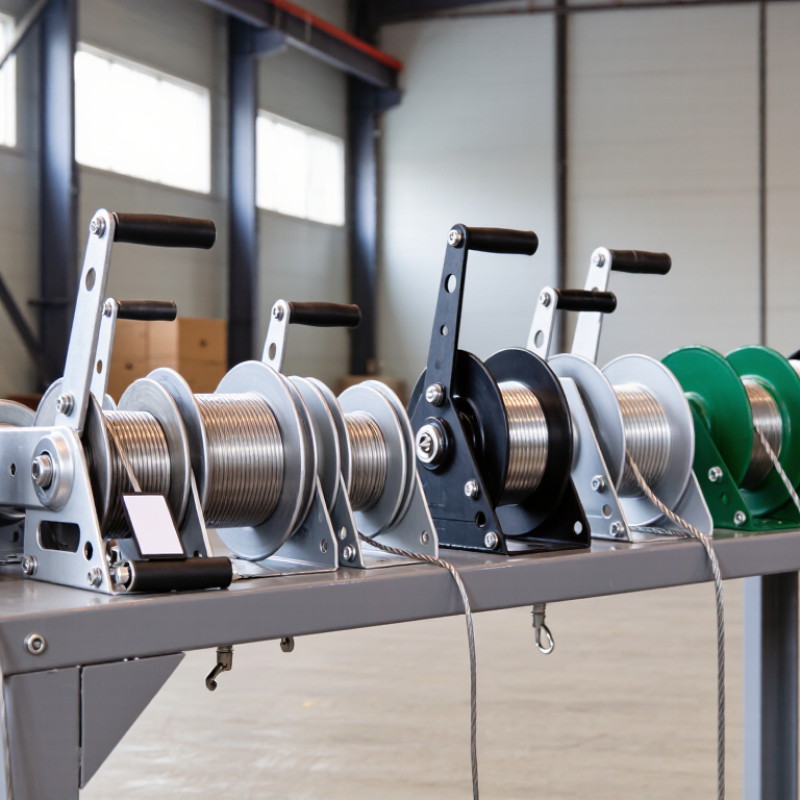
A Tirfor winch is a manually operated wire-rope pulling device. A lever moves an internal gripping mechanism, drawing the rope through the unit in controlled increments. Unlike a drum winch, it does not store the working rope on a rotating drum. The rope can be fed to the length needed, which helps when an anchor point is far from the load. It is often used for pulling, positioning, or tensioning equipment; some models are rated for lifting as well.
On a worksite, crews may use one to shift a steel beam into alignment, tension a cable, or move machinery across a workshop floor. In forestry or utility work, it can help reposition equipment where powered machinery is difficult to access. The device still depends on a sound anchor, compatible wire rope, and a clearly understood working-load limit. Small details matter. A bent lever or damaged rope deserves attention, not a quick workaround.
Before use, operators should check the rope, hooks, connectors, and load path, then follow the manufacturer’s instructions for the specific model. Keep people clear of tensioned rope, which can recoil if a connection fails. A firm-looking setup is not proof of safety; I would rather pause and reassess than trust appearance alone. That caution can feel inconvenient, but it is part of using a hand winch responsibly.
China Top 10 Tirfor Winch Manufacturers for Global Buyers - What Tirfor Winches Are and Where They Are Used
A practical overview of manual wire-rope pulling equipment, its operating characteristics, and common applications. This table describes equipment and use cases; it does not rank or identify manufacturers.
| No. |
Topic |
Practical facts for buyers |
Typical use or consideration |
| 1 |
What a Tirfor-style winch is |
A portable, manually operated wire-rope pulling device. A lever moves the rope through gripping jaws inside the mechanism. |
Useful where a powered winch or fixed drum installation is impractical. |
| 2 |
How movement is produced |
Repeated lever strokes advance or retract the wire rope through the unit; the rope is not wound onto an integral drum. |
Pulling distance is not limited by a drum’s rope-storage capacity, but the rope length and setup still matter. |
| 3 |
Rated capacity |
Rated line pull and any permitted lifting load are model-specific. They must be taken from the equipment’s rating plate and documentation. |
Select by the required load and duty; do not infer capacity from the tool’s appearance or lever length. |
| 4 |
Wire-rope compatibility |
The rope diameter, construction, condition, and end fittings must match the specific device’s requirements. |
Use only compatible rope; damaged, kinked, crushed, or incorrectly sized rope can compromise safe operation. |
| 5 |
Pulling and lifting |
Some units are rated for pulling and lifting, while others may have different limits or restrictions for each operation. |
Confirm the approved operating mode, load rating, and safety instructions before lifting a suspended load. |
| 6 |
Construction and installation |
Manual wire-rope pullers can move or position equipment and materials when a suitable anchor point is available. |
Common tasks include aligning structural components and positioning machinery during installation. |
| 7 |
Utilities and maintenance |
Portable operation can be useful for controlled pulling in locations without convenient access to powered equipment. |
Applications may include moving equipment or tensioning components, subject to the job plan and rated load. |
| 8 |
Forestry and land work |
A manual puller may assist with repositioning logs or other loads where access and anchoring conditions are suitable. |
Assess the load path, ground conditions, anchor strength, and potential for the load to roll or shift. |
| 9 |
Marine and outdoor work |
The equipment may be used for pulling tasks in marine or outdoor settings, but environmental protection varies by model. |
Check corrosion protection, storage requirements, and inspection guidance for the intended environment. |
| 10 |
Anchoring and safe setup |
The anchor, connectors, and supporting structure must be suitable for the forces generated. Follow the manufacturer’s setup and inspection instructions. |
Keep the rope correctly aligned and keep people clear of the load path and tensioned rope. |
Always verify the device rating, permitted operating mode, compatible wire rope, inspection requirements, and applicable workplace safety rules before use.
How to Evaluate Chinese Tirfor Winch Manufacturers
China Top 10 Tirfor Winch Manufacturers for Global Buyers
How to Evaluate Chinese Tirfor Winch Manufacturers
A dependable evaluation starts with the actual job: pulling, tensioning, or lifting. These duties are not interchangeable. Ask manufacturers to state rated line pull and lifting capacity separately, and confirm that the model is designed for your intended use. That distinction matters. Check the compatible wire-rope diameter, maximum rope length, operating effort, brake-holding details, and any limits on duty cycle. Request test records tied to the specific model, not just a general factory certificate.
Review technical documents against applicable requirements, such as EN 13157 where relevant, and request evidence of conformity for your destination market. Ask for proof. Useful evidence includes load-test procedures, inspection criteria, material traceability, and clear instructions for rope threading and routine checks. A sample manual should explain what to do when the rope slips or the brake fails to hold. If answers remain vague, treat that as a warning, even when the quotation looks attractive.
Safety deserves more than paperwork. The International Labour Organization’s 2023 global estimates report nearly 2.93 million work-related deaths and 395 million non-fatal work injuries each year. These figures are not winch-specific, but they underline why equipment verification and training matter. Request a live demonstration under controlled conditions, then compare the delivered unit with its approved specification. I would also check spare-part availability and response times; this is often overlooked, and a neat catalog cannot prove reliable after-sales support.
Profiles of 10 Chinese Tirfor Winch Manufacturers
Profiles of Chinese Tirfor Winch Manufacturers
Chinese manufacturers in this category vary more by engineering focus than by appearance. A useful comparison profiles ten capabilities: complete winch assembly, wire-rope compatibility, forged hooks, load-brake design, gear machining, heat treatment, corrosion-resistant finishes, spare-parts supply, testing facilities, and export documentation. These are evaluation lenses, not verified rankings. Ask each supplier for rated-load test records and rope specifications. Details matter.
Grand View Research estimated the global material-handling equipment market at roughly US$220 billion in 2022, reflecting a broad sector that includes lifting and handling products. This figure is not specific to manual cable pullers, so it should not be treated as a winch-market forecast. For buyers, the practical questions are narrower: does the brake hold under load, does the casing protect moving parts, and are replacement components available?
A close factory review should include a sample inspection and clear operating instructions. Check handle effort, rope-feed smoothness, pin fit, and finish around welds. Ask how rated capacity is tested, and whether test conditions are documented. Not every supplier publishes the same level of evidence. That gap deserves attention. Compare quotations only after confirming identical load ratings, rope lengths, and included accessories; otherwise, a low price can conceal a different specification.
Comparing Product Ranges, Quality, and Production Capabilities
For global buyers comparing China’s leading Tirfor-style winch suppliers, product range matters only when specifications are comparable. Check rated pulling capacity, cable diameter, handle force, travel per stroke, and compatible accessories. Ask whether the quoted load rating applies to the complete unit, not an optional configuration. Small details matter: a muddy site, a long cable run, or a cramped service hatch can change usability. A neat catalog can still mislead.
Quality evidence should include traceable test records, inspection criteria, and clear maintenance instructions. Compare production capability through sample lead times, repeat-order consistency, spare-part availability, and documented inspection stages. The World Bank’s 2023 Logistics Performance Index assessed 139 economies across six dimensions, including logistics competence and timeliness. It is not a factory audit, but it offers useful context when judging export readiness. Ask suppliers for actual dispatch records rather than relying on a polished delivery promise.
A broad product family may signal engineering depth, or simply many catalog options. I would check whether capacity ranges share verified components and whether custom requests trigger fresh testing. That distinction is easy to miss. Request load-test documentation for the exact model, plus packaging dimensions and gross weight for freight planning. Compare answers in one specification sheet; inconsistent units can quietly distort the decision.
How Global Buyers Can Assess Suppliers and Plan Procurement
Global buyers assessing Tirfor winch manufacturers should compare more than quoted prices. Ask suppliers for rated pulling capacity, rope diameter, operating instructions, inspection records, and test documentation. Check that the figures match across the quotation, nameplate, and product manual. Small inconsistencies deserve a follow-up.
A practical supplier review includes factory quality controls, production capacity, export packaging, and access to replacement parts. Request clear photos of the winch, wire rope, hooks, and identification plate. For a first order, a sample or pre-shipment inspection can help confirm workmanship and packaging. It takes time. But a low price means little if a shipment arrives with unclear specifications or missing components.
Procurement plans should define quantities, delivery windows, payment milestones, and acceptance criteria before an order is placed. Confirm how the supplier handles production delays and transport damage, and keep written records of agreed changes. Compare lead times against the project schedule, not just the delivery estimate on a sales sheet. Spreadsheets help, though they cannot show how quickly a supplier answers a difficult technical question. That detail is easy to overlook.
China Tirfor Winch Supplier Assessment: A Buyer’s Checklist
Illustrative procurement-planning weights, not measured supplier or market data. Adjust the weights to match your load requirements, operating conditions, compliance needs, and service expectations.
How to use: Confirm rated capacity and operating limits against the product documentation, verify applicable certifications, and compare warranty, spare-parts availability, and delivery terms before placing an order.